


In our first instalment of The Art of Winemaking series, we looked at the importance of terroir in the winemaking process. This week we consider the vineyards. Row direction, site aspect and soil preparation all need to be determined, and once the correct cultivar has been planted to the correct vineyard site, the work has only just begun.
The yearly cycle of growth and dormancy needs to be carefully monitored and young vines trained to the preferred system to ensure optimal bunch spacing as well as determine potential yield and a number of other factors. Cellarmaster of Creation Wines, Jean-Claude Martin, is a qualified viticulturist and is thus deeply involved in vineyard management as well as in the winemaking process itself.

Row Direction, Aspect and Soil Preparation
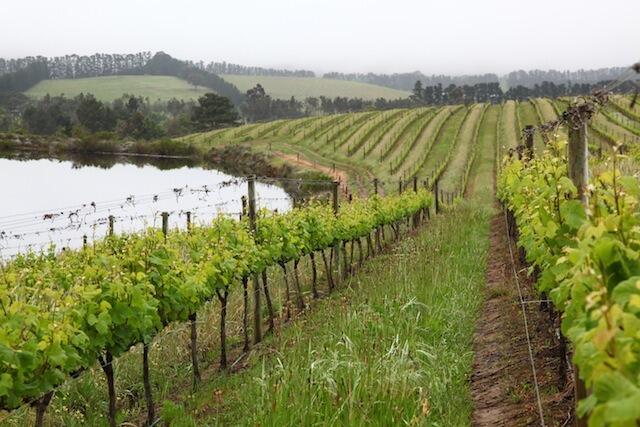
Row direction is an important consideration, with the general rule being that red cultivars are oriented north-south – this means that the ripening bunches receive early morning and late afternoon sun, while the canopy provides some shade during the heat of the midday. White cultivars are oriented east-west, so that there is more shade and protection for the more delicate white grapes as the sun is overhead throughout the day. Slope aspect is an integral part of planting as north- and east-facing slopes are planted to maximise exposure to sunlight, while south-facing slopes tend to be cooler and more shaded. With 450-million-year-old virgin land one of the unique attributes that attracted Jean-Claude, Creation benefits from naturally healthy soils that require little preparation other than deep ploughing and the addition of nutrients and lime to correct the soil pH, before being planted to suitable cultivars.
Training and Trellising
Although the terms training and trellising are often used interchangeably, they refer to different processes. Trellising refers to the actual layout of posts and wires to provide a support structure for the vine, which is a climbing plant. The interchangeability of terms stems from the fact that many vine training systems are named for the trellis structure which supports them – however it is interesting to note that some vines are left unsupported to grow as bush vines. The main purpose of trellising and training is canopy management.
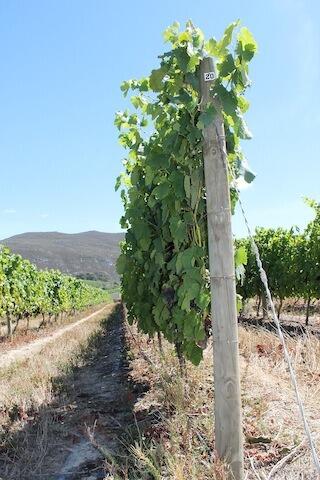
This means structuring the canopy growth and fruiting zones so that there is ample foliage to facilitate the process of photosynthesis, but also that there is enough penetration of sunlight and air circulation so as not to hinder the ripening of grapes or promote diseases associated with humid conditions – downy mildew and grey rot being prime examples. Direct sunlight is important in developing phenolic ripeness in grapes (influencing the tannin structure and aromatics in the wine), while excessive shading from an overly vigorous canopy can hinder the rate of bud fertility, onset of bud break and fruit set which determines the size and quantity of berries on a cluster.
Another interesting purpose of trellising is preventing the cordons (or fruit bearing ‘arms’) of the plant from touching the ground as the weight of the canopy and fruit increases during the growth period. Being a climbing plant the vine has a propensity to put down ‘suckers’ or basal shoots to take root in the area where the cordon comes into contact with the ground. Although most vineyards are planted on phylloxera-resistant rootstock (usually American or hybrid), the fruit bearing part of the vine is of a different, phylloxera-susceptible species: vitis vinifera, and should it put down roots both the new plant as well as the mother plant are likely to be infected.
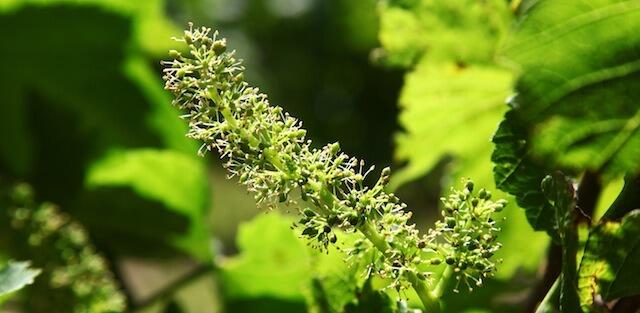
Controlling canopy vigour in young vineyards is especially important as the root systems will only reach maturity after 8 to 10 years of growth. The vine needs a healthy and fairly extensive root system and adequate reserves of carbohydrates to support a high vigour canopy. If the root system to canopy ratio is not balanced it is considered overly vigorous and parts of the plant (most likely the fruit clusters) will be starved for resources, producing inferior quality fruit.
Pruning
The simple task of removing parts of a plant to shape and control its architecture has far-reaching implications, as one would imagine. The most obvious result is greater control over fruit producing parts of vines, but pruning is also a significant tool for balancing vegetative growth with fruiting. A healthy canopy is essential for the development of the fruit and the pruning of young vineyards has a direct influence on the root mass that develops. Vineyards are also pruned to suit the training system that is deemed optimal for a specific cultivar on a specific site – the most economical way to establish and maintain a vineyard that is efficient and sustainable, optimising the use of available sunlight and promoting productivity.
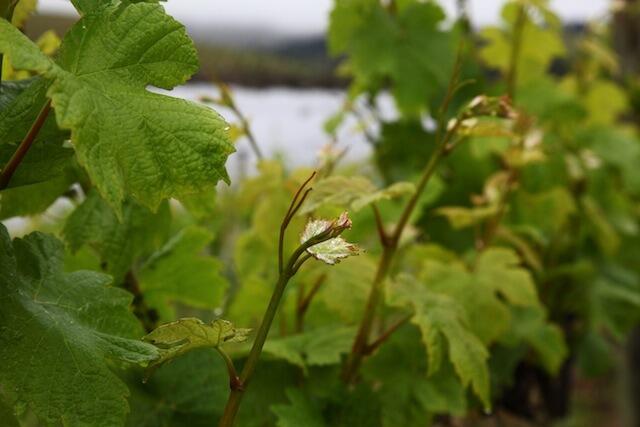
Grapes bear fruit on green shoots growing from one-year-old canes. Pruning is thus based on producing fruit in the current season, and renewing young canes for the following growth season. There are several methods used in pruning established grapevines, however cane pruning is the most common system, where a permanent trunk is established, and every year new canes are selected from the head of the vine. One or two canes on either side, each 8 to 10 buds long, are selected and tied to the wire, and all other canes cut out – this practice is called cordon pruning with two bud spurs.
Assessing the various vineyard sites with the help of local viticulturist Johan Pienaar, Creation’s vineyards are VSP (vertical shoot positioning) trained and are pruned cordon-spur. This means that they employ permanent horizontal cordons from which two bud spurs are pruned and from which new shoots are produced during the growing season. Although this method is effective for high density planting, it does require summer pruning including trimming the canopy to restrict vegetative growth. The focus is on sugar and flavour production of the grape, and might need leaf stripping to maximise the exposure to direct sunlight, aiding phenolic ripeness.
Creating a Virus-Free Legacy
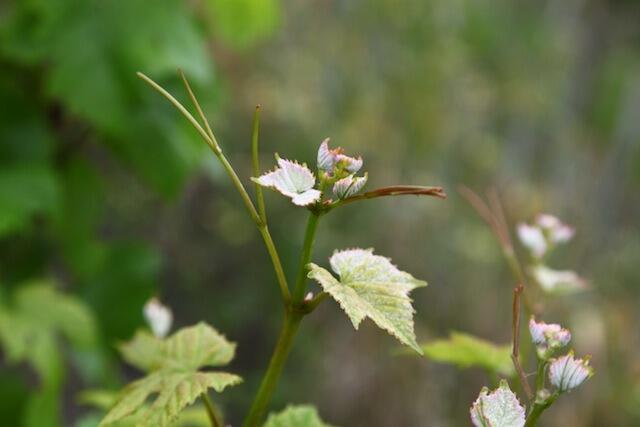
Another important aspect of pruning, particularly at Creation, is the virus-free status of the grafting material that we supply to Vititec, to establish new vineyards across the country. Leafroll virus in particular is spread through infected material, and is a huge problem in South Africa. The virus is more noticeable in red cultivars, and is characterised by green veined, bright red leaves that curl down at the edges while the fruit is still ripening. The affected canopy produces fruit which is noticeably less ripe, and while the virus can be managed, often vineyards will have to be replanted.
In Summary
The careful attention required to maintain control during the growth season is proof that wine must first be made in the vineyard – left to themselves vines produce grapes that attract birds but are not destined to be fine wine. It seems then that the dedication and patience required when growing wine is equalled only by the pleasure of drinking it, albeit only the first step in a process as complicated as its product itself.
In next week’s blog the art of harvesting will be discussed.