


by Sarah Taylor
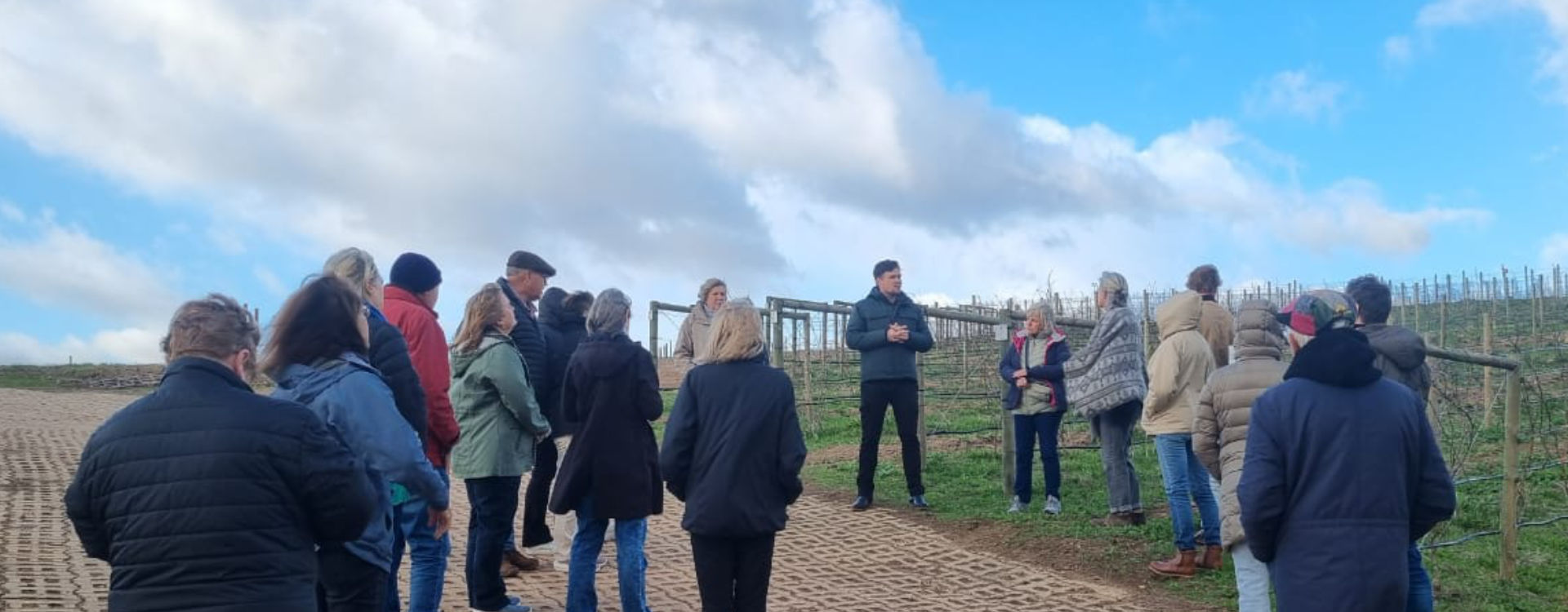
Towards the end of June, I was privileged to join a walk-and-talk at Creation Wines entitled ‘Grow wise, grow wild: Indigenous Plants, Conservation and Climate-Smart Gardening’.
First, with rain threatening to fall at any moment, we were treated to a 45-minute guided walk on the estate with Creation’s conservation enthusiast and wine specialist, Stephan Theunissen. He explained the terroir, as well as some of the environmental initiatives Creation has adopted, from solar-energy production to water recycling and regeneration of the natural environment.
This was followed by an introductory talk on the Botanical Society of South Africa (BotSoc) by the society’s CEO, Antonia de Barros, and its Fundraiser and Events Coordinator, Catherine Gribble, before Master Horticulturalist Cherise Viljoen spoke about climate-smart gardening and how we, as home gardeners, can support BotSoc’s mission to protect South Africa’s unique plants through cultivation.

A holistic, sustainable approach
Creation owners Jean-Claude and Carolyn Martin prioritise sustainability and a healthy environment in their business, focusing not just on wine but also on the wellness of their staff and guests, and the land around them.
Situated in the heart of the Cape Floral Kingdom, high up on the Hemel-en-Aarde Ridge between the Kleinriviersberg and Babylonstoring, the estate was a sheep farm before the first vines were planted by the Martins in 2003. Since then, they have made it their mission to care for the natural environment as well as their vines, and more than 15 hectares of their 68ha farm have been allocated to conservation.
Stephan explained that all the water used on the estate comes from the mountain, and is purified for use in the winery and tasting room, while cellar water is recycled for use in irrigation. The farm is 95% energy self-sufficient thanks to a large solar array, with any surplus power fed back into the national grid
A wide variety of bird species helps to reduce pests around the vines, and bird boxes have been placed around the estate to encourage owls to nest. Cleared alien vegetation on the estate is being replaced with indigenous plants, including evergreen trees such as water berry (Syzygium cordatum) and rooiels / red alder (Cunonia capensis).
Creation’s commitment to environmentally responsible farming and passion to conserve the natural environment have been heralded by the World Wide Fund for Nature South Africa (WWF-SA), which awarded the estate Conservation Champion status in 2022.
No stranger to international and regional accolades since winning its first in 2010, Creation received the V d’Or Award – dubbed the Oscars of Wine – for Best Brand Experience in 2024, as well as third place in the World’s Best Vineyards competition (first place in Africa). The estate won two awards in the 2025 Great Wine Capitals Best of Wine Tourism Awards, for Wine Tourism Services and Sustainable Wine Tourism Practices. It is also one of only nine vineyards in the country to receive EnviroWines accreditation.
‘Know, grow, protect and enjoy’
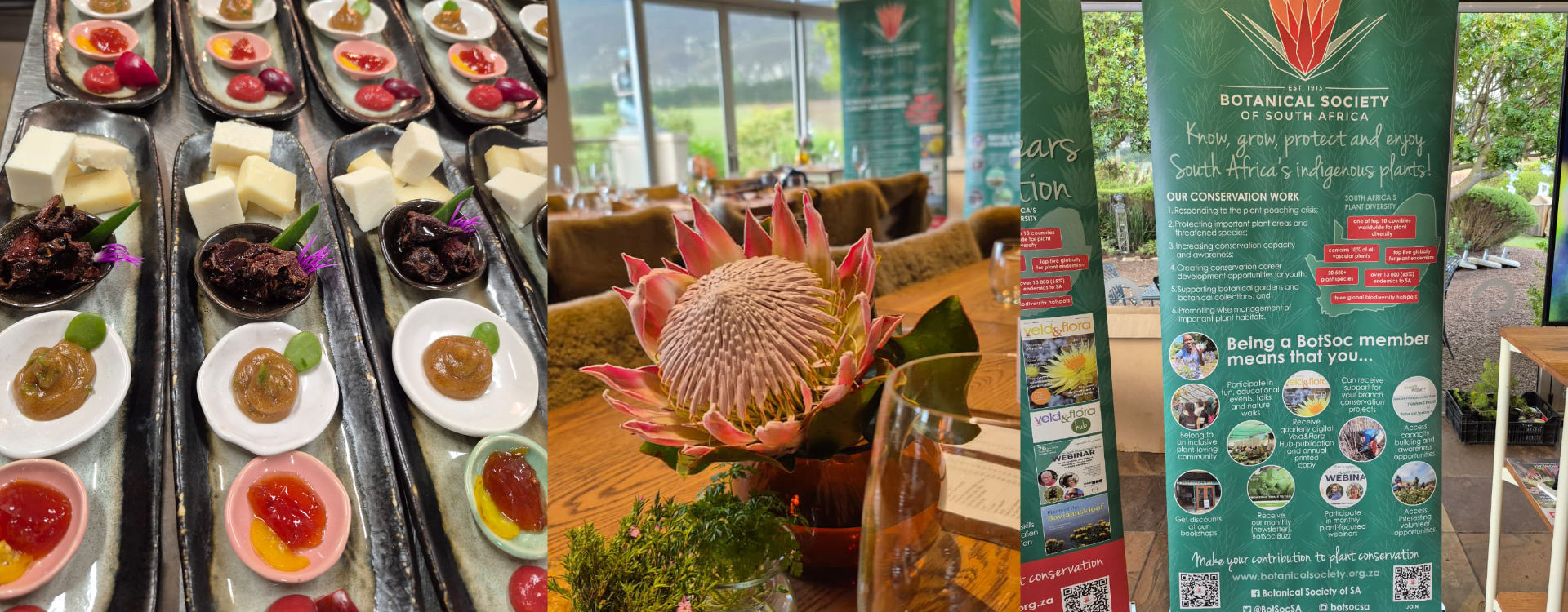
The Botanical Society of South Africa’s mantra is ‘Know, grow, protect and enjoy’ (referring to South Africa’s indigenous plants). CEO Antonia noted that BotSoc turns 112 years old this month (June 2025), and she thanked Creation Wines for partnering with the non-profit organisation. ‘Our legacy is due to the kind of commitment of people like Stephan and others interested in plant conservation. We are really privileged to have a wine estate like Creation that has come out to support our organisation with specific events, and Stephen and team seem committed to take things forward… I am hoping we can partner together again in future like this.’
BotSoc’s work covers various areas, including combatting plant poaching, establishing biodiversity conservation gardens, assisting with youth development, conducting alien clearing, and encouraging citizen science work. The organisation works with key partners such as the South African National Biodiversity Institute (SANBI) and the Custodians of Rare and Endangered Wild Plants (CREW), as well as with specialists like Cherise.
‘South Africa is a very special place in terms of our biodiversity and we need to protect that,’ BotSoc’s CEO said.
In terms of plant diversity, South Africa is one of the top 10 countries in the world with over 20,000 indigenous plant species. It is in the top five countries globally when it comes to plant endemism, with over 65% of plants endemic to South Africa – meaning they are found only in SA, nowhere else in the world. The Cape Floristic Kingdom (CFK) declared a UNESCO World Heritage Site in 2004, is one of the world’s most botanically rich habitats. It is one of six plant kingdoms and the only one completely contained in a country.
Cherise impressed upon us the incredible biodiversity we have on our doorstep in the Overberg by saying: ‘The entire northern hemisphere has fewer floral species than this floral kingdom in the Western Cape…which covers just 90,000km2 or 0.4% of the land surface on the Earth and contains over 9,000 plant species! Seventy percent of the plants found in the CFK are endemic and occur nowhere else in the world.’
A passion for indigenous plants
Cherise worked as a horticulturalist at Kirstenbosch for 21 years and now has her own consultancy, Cherish Plants.
Her talk was preceded by a delicious food-and-wine tasting/pairing – four sharp goat’s cheeses from the Overberg paired with deliciously tart preserves made from indigenous South African fruits: kei apple (Dovyalis caffra), Natal plum aka ‘num-num’ (Carissa macrocarpa), sour fig (Carpobrotus edulis) and spekboom (Portulacaria afra). This was accompanied by a refreshing orange-peel-kombucha elixir and Creation’s light, refreshing Sauvignon Blanc.
Cherise then shared her wealth of knowledge and passion for botanical horticulture with those present, inspiring us all to garden with conservation at heart. She highlighted plants that are vulnerable, such as Chasmanthe floribunda (cobra lily) and Erica verticillata (whorl heath), the latter which was rescued from the brink of extinction thanks to Kirstenbosch’s conservation and cultivation programmes during the 1970s and 1980s. By planting these plants in our gardens, we can contribute directly to their conservation, Cherise said.
She empowered us, too, with practical plant-scouting tips, encouraging us to ‘look for roots’ and choose plants that are slower-growing and more local, as these tend to live longer. Local bulbs and annuals are ideal as they are drought resistant.
Plants with fragrant foliage tend to be hardier as the volatile oils in their leaves protect the leaves from drying out. These include the many wonderfully scented pelargoniums and buchus we have here.
‘Don’t plant a lawn!’ she pleaded. ‘If you don’t have children, grandchildren or dogs, you shouldn’t have a lawn.’ She recommended instead planting endemic Dymondia margaretae, commonly known as silver carpet.
Most fynbos plants don’t grow in rich, fertilised soils and we should rather use soil-enriching compost and add mulch on top. Cherise swears by the ‘no toil’ or ‘no dig’ approach so as not to disturb the soil microbes. Water first and then weed, she advises, as the weeds will then release easily.
She handed around small cuttings of aromatic Coleonema album, a buchu growing along the Hermanus Cliff Path; the delightful peppermint-scented, incredibly soft-leaved and shade-loving Pelargonium tomentosum, a Western Cape endemic; and the rare (not-yet-threatened) scabrous lemon-scented Pelargonium citronellum, its rough leaves a good sign that it can handle hardier environment than its cousin (the above-mentioned P. tomentosum).
‘Get personal with your plant!’ enthused Cherise. ‘Remember you are making friends with them. Crush the leaves, feel it, smell it.’
She ended by asking us each to create ‘pollinator patches’ in our garden, so wildlife can move from garden to garden, extending ‘conservation corridors’.