


By Ian Glenn
I am belatedly reading Jean-Jacques Rousseau’s Reveries of a Solitary Walker – part of a project on understanding the romantic view of nature. Most critics agree that in Rousseau’s last great work, the ‘Fifth Promenade’ chapter – based on the two months that Rousseau spent more or less imprisoned on the island of St Pierre in Lake Bienne (now called Biel) – is not only the high point of this book but of nature writing generally.
Rousseau describes his days in close botanical investigation but also his sense of deep peace in finding harmony with nature. He gives the island an ecstatic review: ‘I was only allowed to spend two months on this island, but I would have spent two years, two centuries and all eternity without being bored for a moment… I count those two months as the happiest time of my life…’
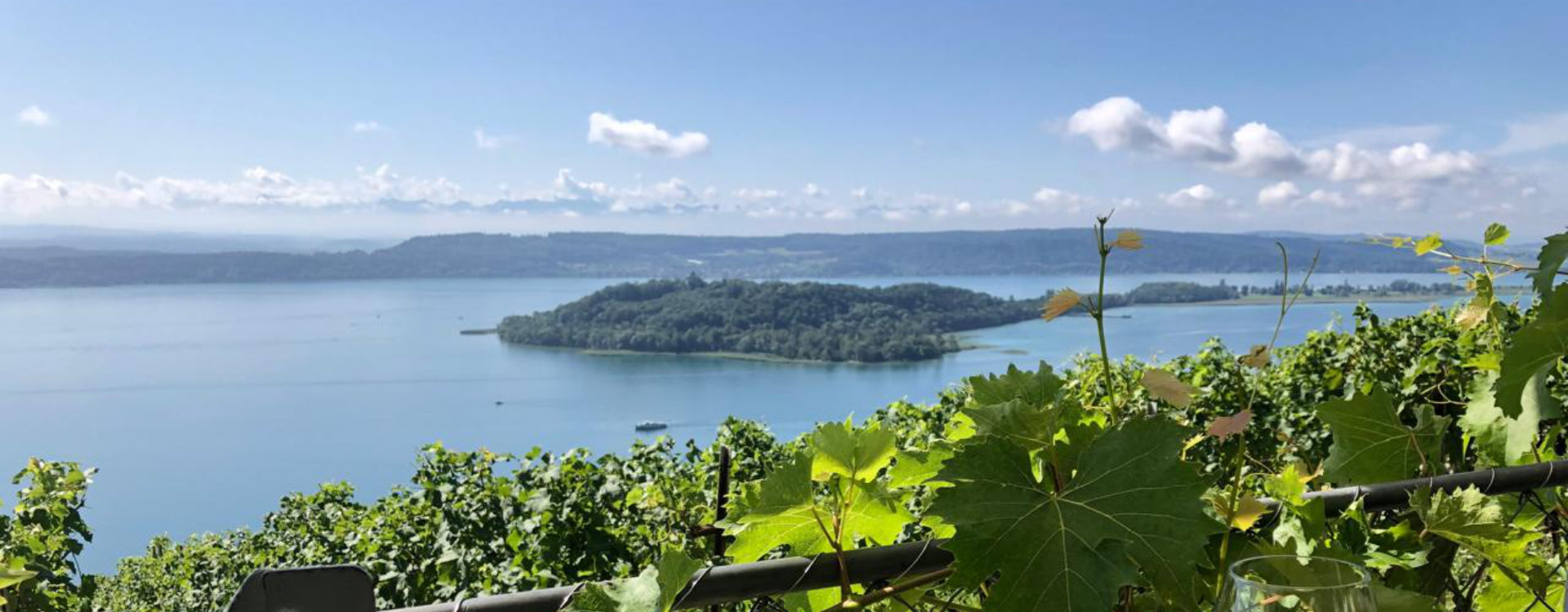
Shortly after my Rousseau readings, I find myself in conversation with Jean-Claude (JC) Martin, the Swiss-born co-owner and winemaker of Creation in the Hemel en Aarde, South Africa, and ask him if he has ever heard of the island of St Pierre in the lake of Biel.

He looks a mix of amused and suspicious. Do I not know that he and his wife Carolyn (née Finlayson) got married there and that his family had the nearest wine farm to the island in the town of Ligerz? ‘I spent my childhood boating near the island and playing soccer on it,’ he adds.
I decide this intellectual terroir needs some unpacking. How does JC’s Swiss background influence him? Does his Swiss background help explain why nature is at the centre of his winemaking philosophy? And how does Creation continue to develop this legacy?
How has Creation, within 20 years of planting its first vines, become one of the top wine destinations in the world, up against wine farms with centuries of history and/or hundreds of millions of dollars of investment with buildings from leading international architects? How does a wine farm in a fairly remote part of the Overberg, quite a trek from other tourist attractions, regularly get rated as a top wine destination in Africa, ahead of many Cape Town vineyards with 350 years of history and storied pasts?
JC explains that his family were French Huguenots who left France in 1685, after the revocation of the Edict of Nantes. He is amused by the thought that he has made his way all the way from the Jura mountain area of Switzerland to which they were exiled almost to Franschhoek, where many other French Huguenots helped establish the South African wine industry.
The French Huguenots in Switzerland were settled on tough mountainous terrain and farming was mixed, with wine a useful healthy staple rather than an elite product for many generations. The family farm is in Ligerz, which Hugh Johnson and Jancis Robinson describe in their Concise World Atlas of Wine as one of the villages with small plots producing ‘particularly fine Pinot Noir’ (p206). They note the careful attention to growing in Switzerland where ‘every vineyard, almost every grape, is tended as and by an individual’ and where ‘plots of vines are attentively gardened rather than commercially farmed’.
JC was sent to study viticulture for three years and then oenology, giving him probably the most advanced and complete European training of any South African winemaker. He speaks admiringly of the holistic attitude to winemaking in Switzerland, with some farmers still driving tractors into their eighties, bringing a lifetime of experience and knowledge of local conditions to every vintage.
The Swiss wine industry is heavily regulated both in terms of where and what one is allowed to plant, he explains. The advantage of controlled production is that wine sales are easier to manage, whereas the less controlled South African situation allows for more experimentation and innovation.
Perhaps it was some renegade spirit among the Swiss red tape and regulations that led JC, in the mid-1990s, like others in Bordeaux at more or less the same time, to start experimenting with a small batch of wine literally produced in a garage. ‘I was the role model of a garagiste!’ he says. In 1997 he made his mark on the Swiss wine scene when he produced a Chasselas that won a regional blind tasting competition. He attracted the attention of an investor wanting to restore Domaine Grillette, a formerly well-known but then neglected Swiss estate.

While JC had visited South Africa in the heady early days of the new Republic, working at Glen Carlou on their harvest, he had not planned to return. Then in Switzerland he met Carolyn Finlayson, at that time based in London. The two married on St Pierre Island and their children Glenn and Emma were born in Switzerland. After some years, JC sold his shares in Domaine Grillette and the family decided to take a leap and make South Africa their home. It would change the course of JC’s career.
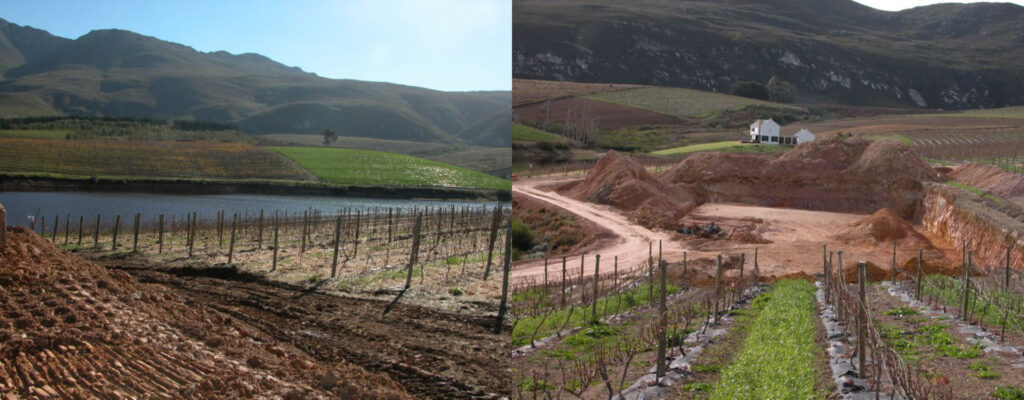
Based on the advice of Carolyn’s uncle, Peter Finlayson, the couple decided to take the risk of buying the farm that would become Creation. JC pays tribute both to Peter and Walter Finlayson, Carolyn’s father, saying that it helped to feel they had wisdom on their side. He is also genially grateful for the timing of their life-changing decision. Had he and Carolyn been younger, they would not have had the experience and confidence to tackle this project. And had they, like many who invest in wine farms, waited until their 50s or 60s to buy, they would not have had the time to see their project through to completion. Their timing was perfect.
JC’s experience of different wine cultures and challenges gives him an interesting take on what global warming is going to mean for wine production and the role of the Hemel-en-Aarde. He feels that South Africa has a major advantage in that it is not as limited in what it can produce as some top international vineyards whose identity is tied to a particular cultivar and estate production.
In South Africa, vineyards can protect wines, and winemakers can bring in grapes from cooler regions or switch cultivars. The tough job, both for the wine and the food side of Creation, is to achieve consistency, in the vineyards and the tasting room, using innovation as the driving force.
JC introduced several new wines to Domaine Grillette in the 1990s, but notes that when he returns to Switzerland, he is struck by how little has changed there in winemaking compared to in South Africa.
What are the other challenges facing wine farming and wine estates in South Africa and internationally? What does Creation do differently?
Recent studies suggest that in South Africa only 10% of wine farms are profitable. 40% more or less break even and 50% operate at a loss. JC shrugs and suggests that trying to make money out of wine is not necessarily good business. What would it take to start a new Creation and buy in the expertise he and Carolyn represent? Who is willing to wait up to seven years between planting a vine and getting a harvest when other investments might do very well in that period without the risk or hard work?
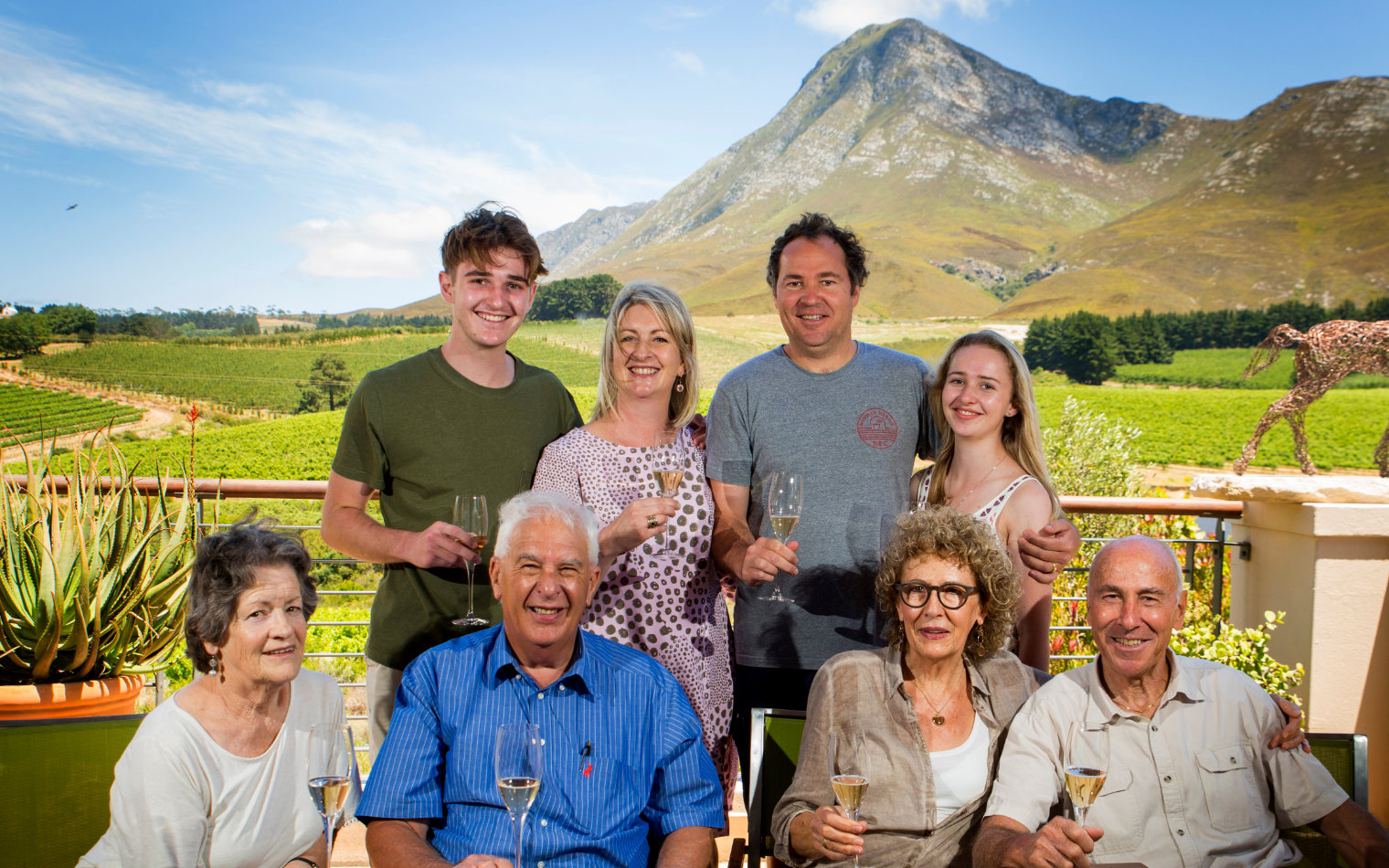
What he likes about Creation and what accounts for much of its charm is the sense of being in the middle of a working vineyard and wine cellar. When one compares Creation to many of the other top international winners, it seems charmingly modest, family based. JC and Carolyn want to pass on a working concern to children who will be world citizens, bringing the best of international experience and networks to shape the future.

Given the success of Creation’s Tasting Room, we discuss the dining scene in the Western Cape, and JC suggests there is a wonderful opportunity for a fine dining evening experience in Hermanus. I trot out the usual diagnosis: too many retirees watching our pennies, too many good middle-of-the-road offerings but little to take on the Franschhoek or Cape Town heavyweights. JC retorts that if the buzz at Creation is anything to go by, surely Hermanus, with its wonderful tourist attractions, could draw them. A top chef should be willing to do what he and Carolyn did: take risks for years and build the brand and reputation.
When I ask how the wine marketing business has changed, JC says that, world-wide, winemakers report the same thing: buyers and customers want to hear from the winemakers themselves, to hear the story behind the brand. We are drinking stories, it seems. This is easier for Creation than for most corporate brands. They can draw on the legacy of Rousseau, the bitter-sweet experience of exile and putting down new roots, the ability to make nature both the object of close study and proper grounding.
ABOUT THE WRITER: Ian Glenn is a prominent South African academic, an Emeritus Professor of Media Studies at the University of Cape Town (UCT), and a Research Fellow at the University of the Free State.